
Marital community property can affect important decisions about ownership, control, and property rights during a marriage and when that marriage later changes. In Washington, these rules often become especially important when questions come up about a house, other assets, or who has legal authority over property.
The topic can feel confusing at first because property is not always treated the way people expect. What seems straightforward in everyday life may be handled differently under state law.
In this guide, you will learn what marital community property means in Washington, how it differs from separate property, when community property rights may end, and how these rules can affect the sale of a house.
What Is Marital Community Property in Washington?
In Washington, marital community property generally means property acquired during marriage that is treated as belonging to both spouses under state law.
Washington law says property acquired after marriage, except for property classified separately, is community property.
This can matter more than people expect. A house, income, or other asset may be treated as community property even if only one spouse earned most of the money or only one name appears on some documents.
For homeowners, this becomes important when:
- selling a marital home
- refinancing a property
- transferring title
- dealing with divorce or the death of a spouse
In Washington, one spouse generally cannot sell or encumber community real property alone without the other spouse joining in the transaction. That is why community property issues can directly affect whether a home sale moves forward smoothly or gets delayed.
Separate vs Community Property in Washington

In Washington, community property generally means property acquired during marriage. Separate property generally means property owned before marriage or later received individually by gift.
That distinction can affect who has rights in a house and who may need to sign sale documents.
1. What Usually Counts as Community Property
Homes, income, and other assets acquired during marriage are generally treated as community property in Washington. State law says property acquired after marriage, other than property classified separately under the law, is community property.
That can include a house purchased during the marriage, even if one spouse handled most of the payments.
Washington law also generally does not allow one spouse to sell or encumber community real property alone without the other spouse joining in the transaction.
2. What Usually Counts as Separate Property
Property owned before marriage may remain separate property in Washington. The same is generally true for property later received individually by gift, bequest, devise, descent, or inheritance.
This often matters when a house was purchased before marriage or passed to one spouse through inheritance.
Washington law also says a spouse may manage, sell, convey, encumber, or devise separate property without the other spouse joining, as though unmarried.
What Are Common Exceptions to Community Property in Washington?
In Washington, not everything connected to a married couple is automatically treated as community property. Some assets often stay separate based on when they were acquired, how they were received, or how the spouses agreed to treat them.
Washington law defines separate property directly, and Washington courts also note that figuring out what is separate can become unclear in some situations.
Common exceptions often include:
- Property owned before marriage
Property a spouse owned before getting married generally remains separate property. - Inheritance received by one spouse
Property received individually by inheritance is generally treated as separate property. - Gifts made to one spouse
A gift given specifically to one spouse may remain separate property. - Valid written agreements between spouses
Prenuptial or marital agreements can affect how certain property is treated. - Separate property kept clearly separate
Property may remain separate when it is not mixed with shared marital assets or community funds.
When Does Community Property End in Washington?
In Washington, community property issues usually become more important when the marriage relationship legally changes or ends.
That often happens during divorce, legal separation, or after the death of a spouse, because those are the points when ownership and property rights must be addressed more directly.
1. Divorce or Legal Separation
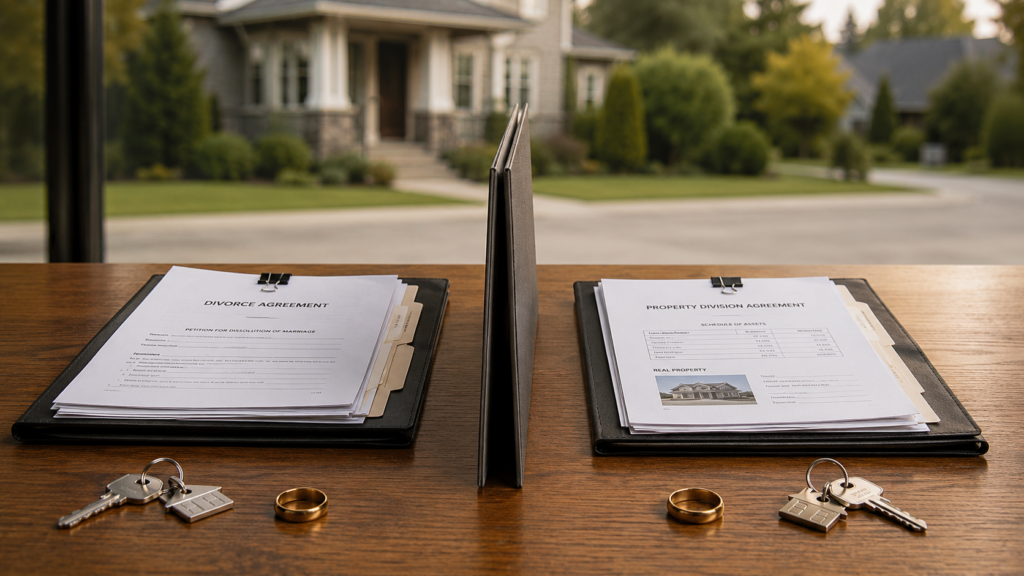
Divorce or legal separation is often the point when property division becomes a major issue.
Under Washington law, in a dissolution or legal separation proceeding, the court makes a just and equitable disposition of the parties’ property and liabilities, including both community and separate property.
This can affect who keeps the house, whether it will be sold, and how the proceeds or remaining obligations may be handled.
2. Death of a Spouse

When one spouse dies, ownership and transfer rights can change quickly.
Under Washington law, one-half of the community property is confirmed to the surviving spouse or surviving domestic partner, while the other half is subject to the deceased person’s will or passes under Washington inheritance law.
This is often the point when questions come up about who now has authority over the property and whether the home can be sold right away or must go through additional legal steps first.
3. Agreement or Change in Property Status
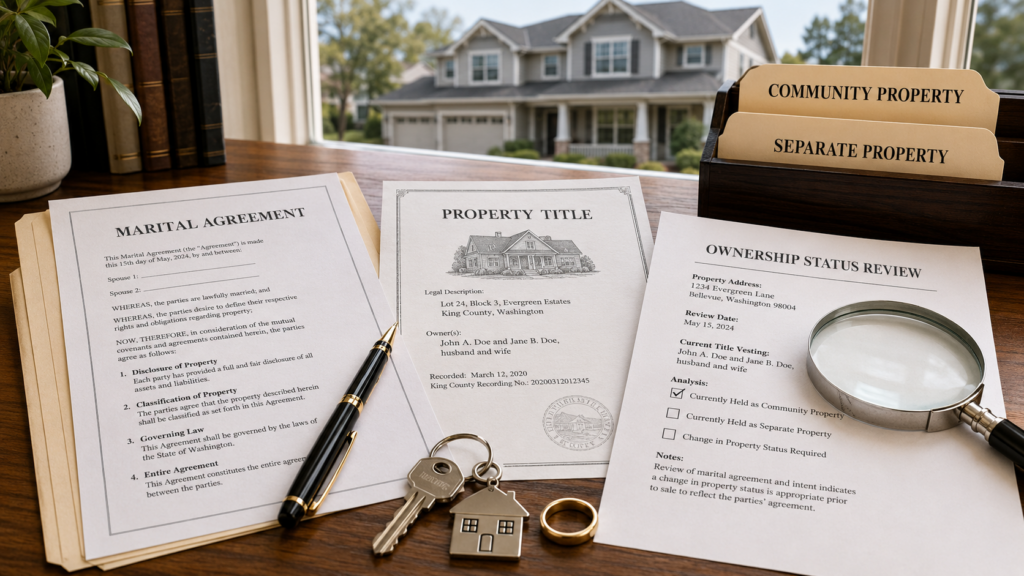
In some cases, spouses can enter into agreements that change how certain property is treated.
That can affect whether a house is viewed as community property, separate property, or subject to a different ownership arrangement.
When that happens, it can create delays or confusion around a sale. Before moving forward, it is often important to confirm how the home is classified and who needs to be involved in the transaction.
How Marital Community Property Can Affect Selling a House in Washington
This is often where community property becomes a real sale issue.
A house sale can become more complicated when ownership is unclear, when both spouses are not aligned, or when death or divorce changes who has authority to act.
Below are some of the most common ways marital community property can affect a home sale in Washington.
1. When Both Spouses May Need to Be Involved

If a house is treated as community property, one spouse usually cannot sell or encumber it alone.
In Washington, the law generally requires the other spouse to join in the deed or other instrument used to sell, convey, or encumber community real property.
That matters because a sale may not move forward smoothly if one spouse is unavailable, uncooperative, or does not agree with the sale.
2. When Ownership Classification Is Unclear

Problems can come up when a family believes a house belongs to one person, but the legal classification may suggest something different.
This can happen when a home was bought during marriage, partly paid with separate funds, or treated inconsistently over time.
Washington courts note that in some cases, determining what is separate property can become complex or unclear.
That is why title records and family understanding do not always tell the full story when a house is being prepared for sale.
3. When Divorce or Legal Separation Affects the Sale

Divorce or legal separation often makes a home sale more complex because property division has to be addressed first.
Under Washington law, the court makes a just and equitable disposition of the parties’ property and liabilities, including both community and separate property.
That can affect who keeps the house, whether it must be sold, and how the proceeds may be handled.
4. When the Death of a Spouse Changes Who Has Authority

After a spouse dies, questions often come up about who now has authority over the home and whether probate or title review is needed before a sale can move forward.
Under Washington law, one-half of the community property is confirmed to the surviving spouse or surviving domestic partner, while the other half is subject to the deceased person’s will or passes under Washington inheritance law.
This is often one of the biggest points where people get stuck, especially when the family is unsure who now has the legal right to sign or sell.
Conclusion
Marital community property rules can affect homeownership, control over the property, and the ability to sell a house in Washington. In many cases, both spouses may need to agree to the sale and sign the required documents, even when only one name appears on the deed.
The situation can become more complicated during separation, divorce, or after the death of a spouse. Property bought before marriage, inherited property, gifts, and written agreements may also affect how ownership is treated.
Before listing or selling the home, review the deed, financial records, court orders, marital agreements, and estate documents.
A Washington attorney or title professional can help confirm who has ownership rights and who must take part in the transaction.